Planning Learning Sessions for Sustained Skill Progress
September 3, 2026 2026-08-18 14:16Planning Learning Sessions for Sustained Skill Progress
Planning Learning Sessions for Sustained Skill Progress
Effective learning requires deliberate planning that balances intense focus, spaced repetition, and deliberate recovery to maintain momentum. Building a sustainable routine means breaking skills into manageable chunks and setting clear short-term objectives that fit your schedule. Well-designed sessions keep motivation high, reduce cognitive overload, and accelerate measurable progress when executed consistently. This article outlines practical steps to structure learning sessions that support steady improvement and long-term retention.
Define Clear Learning Goals
Start by identifying the exact skill component you want to improve and why it matters to your overall competence. Use specific, measurable objectives such as increasing speed, accuracy, or comprehension within set timeframes to make progress visible. Clear goals guide practice choices and make evaluation straightforward when you review performance data. Document these targets so you can track progress concretely and adjust expectations based on early results.
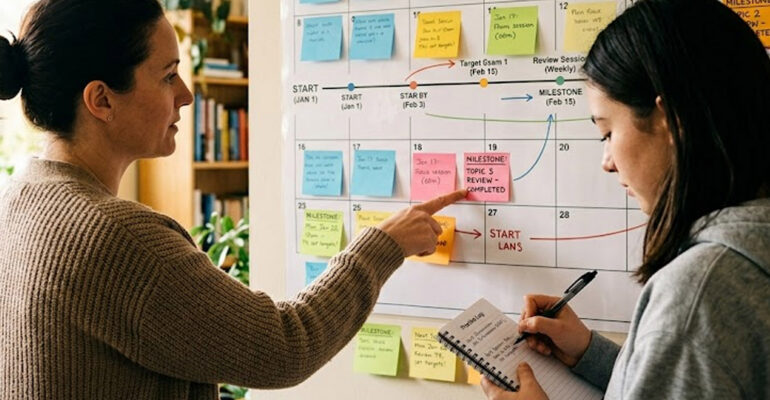
Draft milestone markers for weeks or months and prioritize them based on impact and difficulty. Revisit goals regularly to keep them realistic and aligned with broader learning aims.
Design Focused Practice Sessions
Structure sessions around a single learning target to maximize depth and avoid scattered effort that wastes cognitive resources. Limit each session to a focused practice window, typically 25–60 minutes depending on complexity and fatigue, and include short breaks to reset attention. Begin with a brief warm-up, move into concentrated practice using high-quality tasks, and finish with a reflection or quick review to consolidate gains.
- Use active recall tasks rather than passive review.
- Break complex skills into sub-skills and practice them individually.
- Schedule short review intervals to reinforce recent learning.
Consistent timing and environment cues help habit formation and reduce decision friction, making practice a predictable part of your day. Aim for quality over quantity so each session yields a clear learning outcome.
Integrate Varied Practice
Variety in practice prevents plateaus and promotes flexible skill application across contexts by challenging different aspects of performance. Alternate between drills, problem-solving tasks, and real-world simulations to build robust competence and adaptability. Interleaving different task types also improves transfer and long-term retention compared with repetitive, single-focus drills.
Mix repetition with new challenges to maintain engagement and quickly highlight gaps in understanding. This balance accelerates adaptive learning while avoiding burnout. Over time, such variety makes the learned skills more adaptable and useful in diverse situations.
Review, Feedback, and Adaptation
Regular review sessions and timely feedback are critical for correcting errors and reinforcing correct patterns before they become habits. Use quick performance checks, recordings, or peer feedback to gather actionable data after practice and to pinpoint specific weaknesses. Analyze outcomes to adjust difficulty, change focus areas, or modify session length so practice remains productive and targeted.
Treat adjustments as experiments: tweak one variable at a time and observe effects over several sessions to determine what works. Iterative refinement makes planning resilient and aligned with real progress.
Conclusion
Planning learning sessions deliberately turns scattered effort into measurable growth and predictable outcomes. By defining goals, focusing sessions, varying practice, and adapting with feedback, learners can sustain momentum and improve efficiently. Implement these steps consistently to make steady skill development a reliable result.