Classroom Climate Tech: Sensors Measuring Engagement, Stress & Focus
November 24, 2025 2025-11-24 11:49Classroom Climate Tech: Sensors Measuring Engagement, Stress & Focus
Classroom Climate Tech: Sensors Measuring Engagement, Stress & Focus
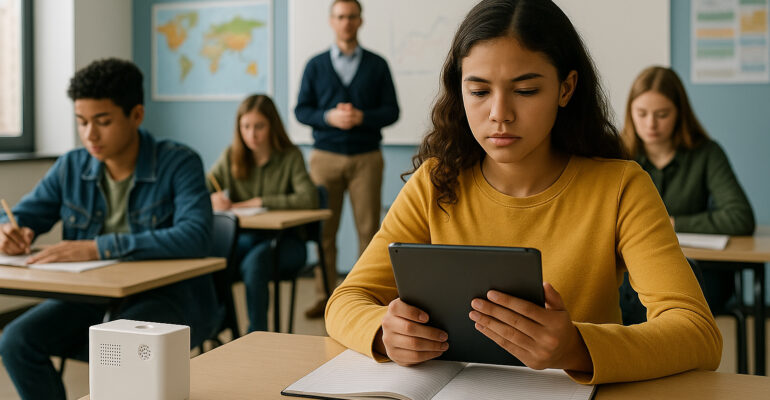
Classrooms are rapidly evolving as schools explore new ways to understand and support student learning. One emerging innovation is classroom climate technology—smart sensors that track engagement, stress, focus, and overall classroom dynamics. Rather than replacing teachers, these tools provide subtle, real-time insights that help educators tailor instruction and create healthier learning environments. By measuring emotional and cognitive signals, classroom climate tech is reshaping how educators respond to student needs.
Understanding Classroom Energy in Real Time
Sensors designed for classroom climate monitoring track patterns like attention levels, movement, environmental comfort, and stress indicators. These devices don’t identify students individually—instead, they capture group trends that help teachers understand when the entire class may need a shift in pace, activity, or environment. Real-time insights make it easier to spot disengagement early and adjust lessons before productivity drops.
Supporting Student Well-Being
A key benefit of classroom climate tech is identifying signs of student stress. Changes in posture, fidgeting, reduced participation, or collective quietness can signal emotional fatigue. When teachers have access to these patterns, they can introduce breaks, mindful moments, or collaborative activities that help reset the classroom atmosphere. Over time, this promotes healthier emotional habits and stronger learning outcomes.
Boosting Engagement Through Adaptable Instruction
Engagement naturally rises and falls during a class period. Climate sensors help teachers pinpoint when energy is high enough for discussion-based learning or when attention is better suited for independent work. This dynamic feedback supports flexible teaching styles, making learning more responsive and enjoyable. When educators understand the flow of focus in the room, they can craft lessons that align with students’ natural rhythms.
Building Data-Informed Learning Environments
Classroom climate tech provides patterns over time—not just snapshots. Educators can see which times of day are most productive, how lighting or noise affects concentration, and what teaching methods lead to the highest engagement. These insights help schools design better schedules, improve room layouts, and make informed decisions about learning conditions.
Conclusion
Classroom climate technology bridges the gap between teaching instincts and real-time data. By offering insights into engagement, stress, and focus, these tools empower educators to create supportive, adaptable learning environments. As classrooms continue to evolve, climate tech will play a growing role in shaping instruction that responds to student needs with precision and care.