How Digital Portfolios Are Replacing Traditional Report Cards
December 3, 2025 2025-12-03 13:23How Digital Portfolios Are Replacing Traditional Report Cards
How Digital Portfolios Are Replacing Traditional Report Cards
Digital portfolios are transforming the way student progress is measured, shared, and celebrated. Instead of relying solely on traditional report cards, which offer only a brief snapshot of performance, digital portfolios provide a richer, more dynamic view of a student’s learning journey. They showcase growth over time, highlight strengths, and give educators, parents, and students a clearer understanding of academic development. As schools embrace modern learning tools, digital portfolios are quickly becoming the new standard in education assessment.
Offering a More Complete Picture of Student Learning
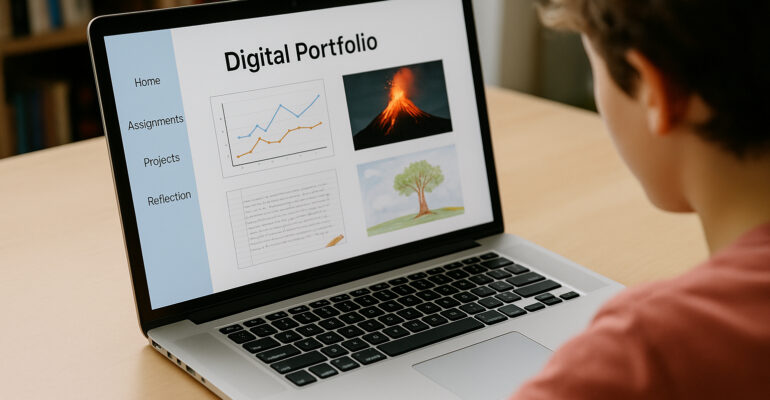
Traditional report cards summarize grades, but they don’t show how a student arrived at those results. Digital portfolios include assignments, projects, quizzes, reflections, and videos that highlight progress across different stages of learning. This comprehensive record helps teachers evaluate understanding more accurately and allows families to see real examples of a student’s work rather than just a letter grade.
Encouraging Student Ownership and Reflection
Digital portfolios encourage students to take an active role in documenting and reflecting on their learning. They can choose their best work, write about their experiences, and describe what they learned. This reflection builds metacognitive skills—helping students understand how they learn—while boosting confidence and motivation. The process turns assessments into opportunities for personal growth.
Enabling Continuous Feedback and Communication
With digital portfolios, feedback doesn’t have to wait until the end of the term. Teachers can provide comments in real time, allowing students to improve quickly and stay engaged. Parents can also access portfolios whenever they want, staying informed about progress without needing scheduled meetings. This continuous communication strengthens partnerships between home and school.
Supporting Personalized Learning Paths
Every student learns differently, and digital portfolios make it easier to track customized goals and individual growth. They allow educators to showcase each student’s unique strengths, whether academic, creative, or technical. This flexibility helps schools shift from a one-size-fits-all grading system to more personalized, student-centered evaluation methods.
Simplifying Storage and Organization
Paper-based report cards and assignments can easily get lost or damaged. Digital portfolios store everything securely in one place, accessible from any device. Teachers can organize materials by subjects, units, or skills, making it simple to review progress at any time. This organized structure is especially helpful for long-term tracking across school years.
Conclusion
Digital portfolios are redefining student assessment by offering richer insight, continuous feedback, and greater student involvement. They provide a more meaningful, personalized approach to tracking academic growth and help families stay connected to the learning process. As education continues to evolve, digital portfolios are emerging as a powerful replacement for traditional report cards—offering clarity, depth, and long-term value.