Make Steady Progress with Small Measurable Learning Steps
June 29, 2026 2026-06-15 10:08Make Steady Progress with Small Measurable Learning Steps
Make Steady Progress with Small Measurable Learning Steps
Learning often stalls because goals are vague and practice feels overwhelming. Breaking growth into small, measurable steps creates momentum and keeps motivation steady. This approach helps busy learners fit consistent practice into everyday life without sacrificing quality. In every stage, clarity and regular review make the difference between intention and progress.
Plan small, focused practices
Start by defining short, specific activities that target one skill at a time. Instead of a vague goal like “get better at writing,” choose a narrow task such as drafting a 150-word paragraph on a set topic or practicing a single grammar structure for ten minutes. Planning these micro-sessions reduces friction and increases the chance of follow-through, because the commitment is short and concrete. Over time these small efforts compound into noticeable improvement.
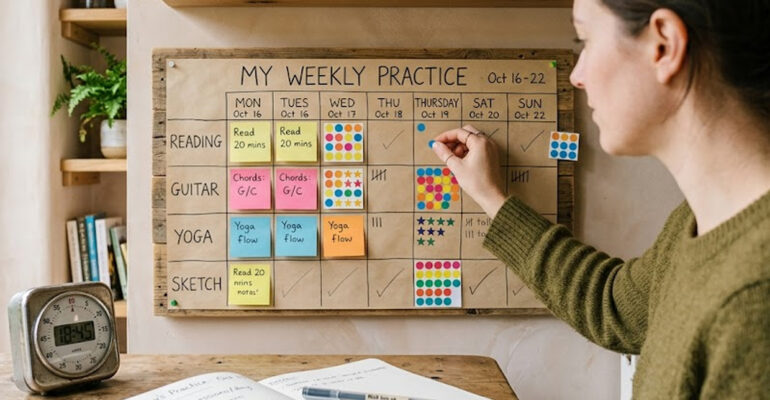
Keep a simple weekly plan to schedule these sessions and treat them as nonnegotiable appointments. Consistency matters more than intensity in the early stages of habit formation.
Measure progress with simple indicators
Choose clear, objective metrics that match your micro-practices so you can track improvement. Use counts (number of practice days), time (minutes per session), or performance checks (accuracy percentage on short exercises) to make results visible. Recording these indicators daily or weekly creates a feedback loop that informs what’s working and what needs to change. Visualizing small wins is motivating and helps maintain momentum.
- Count practice sessions completed per week.
- Note minutes spent on focused practice each day.
- Record one measurable outcome, like words written or problems solved.
Keep the measurement system lightweight so it supports action rather than becoming another chore. Adjust indicators if they stop reflecting meaningful progress.
Reflect and adapt regularly
Schedule brief reflections after each week of practice to evaluate what stuck and what felt forced. Ask straightforward questions: Which micro-tasks produced the biggest learning gain? Which ones were skipped and why? Use this insight to refine the plan, swapping or modifying activities that don’t yield results. Reflection turns raw data into practical changes and deepens self-awareness about learning preferences.
Build a habit of small adjustments rather than sweeping overhauls; incremental tweaks preserve momentum while improving effectiveness. Celebrate modest gains to reinforce continued practice.
Conclusion
Small, measurable steps make learning manageable and sustainable by turning intentions into repeatable behaviors. Regular measurement and brief reflection keep the plan aligned with real progress and maintain motivation. Adopt this framework to create steady, accumulative growth without overwhelming your schedule.