Plan Practice With Purpose: A Simple Learning Blueprint
October 24, 2026 2026-10-21 11:08Plan Practice With Purpose: A Simple Learning Blueprint
Plan Practice With Purpose: A Simple Learning Blueprint
Learning a new skill improves with a clear plan and small, steady actions. A thoughtful practice framework reduces wasted time and keeps momentum when progress stalls. This article breaks down a compact approach to designing practice sessions that actually lead to measurable improvement. Read on for practical steps you can use to create consistent, focused learning habits.
Start with a precise outcome
Vague goals like “get better” rarely guide useful practice; a precise outcome gives direction. Define what success looks like in concrete terms: a specific task you can perform, a measurable speed, or a defined repertoire. Smaller milestones make it easier to choose the right drills and to celebrate real progress. When outcomes are clear, you can trace setbacks to particular skills, not to a fuzzy goal.
Pick one outcome for the next week and let it shape every practice session. Keep that focus until you can reliably demonstrate the milestone.
Design short, focused practice blocks
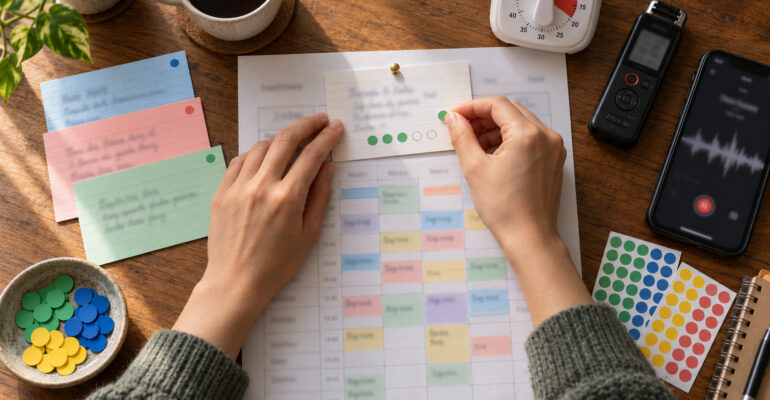
Long, unfocused sessions exhaust attention and hide what actually improved. Build practice from 15–30 minute blocks that have a single purpose, such as drilling a technique or rehearsing a short piece. Each block should begin with a brief warm-up and end with a quick attempt to perform the target under realistic conditions. Short blocks make it easier to add frequency across the week and to maintain high-quality effort.
- Technique drill: isolate one movement or concept for repeated refinement.
- Repetition with variation: practice a challenge in different contexts to build transfer.
- Full run-through: simulate performance conditions to test integration.
Rotate block types across sessions so you balance refinement and transfer. Over time, adjust block length based on which parts still need concentrated work.
Use feedback loops that actually inform practice
Feedback tells you whether a practice choice helped or wasted time, but not all feedback is useful. Prefer measurements you can compare—recordings, timed outcomes, or checklists—over vague impressions. Schedule brief reviews after each week to spot patterns and decide what to keep or drop. Honest, frequent feedback prevents common traps like polishing already-strong skills while ignoring weak links.
Choose one feedback method you can apply consistently and trust. Let that information drive small, specific changes to your next set of practice blocks.
Make the schedule realistic and flexible
Ambitious plans fail when they ignore real life; the best schedules fit into existing routines. Aim for frequency over duration: short daily sessions beat occasional long marathons. Build simple rules for when to practice, and include easy fallback options for busy days. Periodically review your calendar and adjust slots instead of abandoning the plan entirely.
Consistency compounds, so protect the habit more than the exact content of a single session. A sustainable schedule keeps practice alive across months and seasons.
Conclusion
A purposeful plan combines clear outcomes, focused blocks, useful feedback, and a realistic schedule. Start small, measure what matters, and iterate each week based on results. With that approach, steady practice becomes a reliable path to real skill.