Practical Strategies to Boost Lifelong Learning Skills
March 10, 2026 2026-03-04 13:42Practical Strategies to Boost Lifelong Learning Skills
Practical Strategies to Boost Lifelong Learning Skills
Lifelong learning is essential for adapting to changing career demands and personal goals. This article offers practical strategies to structure study time, improve retention, and sustain motivation over months and years. The suggestions suit formal education, online courses, and self-directed projects such as coding, design, or professional communication by emphasizing active practice and deliberate reflection. Read on for concrete planning steps, habit-building tips, and ways to measure meaningful progress.
Understanding Active Learning
Active learning shifts attention from passive absorption to doing, testing, and teaching material to others. Techniques such as retrieval practice, spaced repetition, and interleaving force recall and strengthen memory pathways. Metacognitive habits—planning how to approach a topic and evaluating what remains difficult—help learners adjust strategies efficiently. Combining these methods produces deeper comprehension than rereading or highlighting alone.
Start small by turning a short reading into five minutes of retrieval or a quick written summary. These incremental efforts compound into more durable knowledge across diverse subjects.
Structuring Your Study Plan
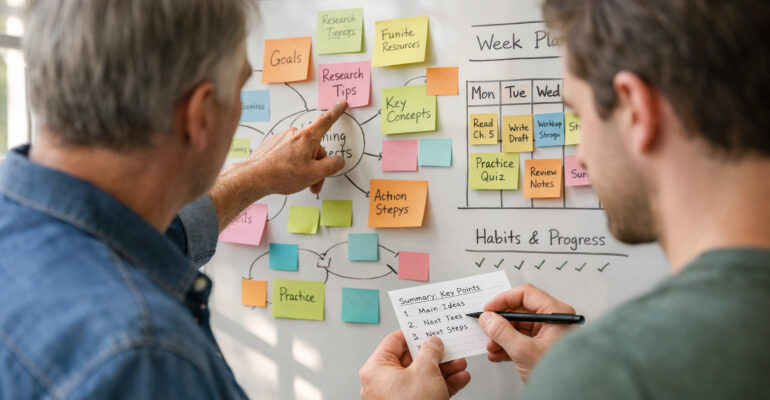
A clear study plan translates broad ambitions into weekly actions with realistic time blocks and specific outcomes. Prioritize tasks using an objective measure, such as practice problems completed or concepts taught to a study partner. Schedule focused sessions with single-task goals and avoid multitasking to preserve cognitive resources and improve efficiency. Regularly review the plan and adjust time allocations to reflect progress and changing priorities.
Use a simple template to track sessions, outcomes, and obstacles so you can spot patterns over weeks. Small adjustments to pacing or content can prevent burnout and accelerate learning. Treat the plan as a living document rather than a rigid mandate.
Building Better Habits and Feedback
Habit formation reduces decision fatigue by automating when and how learning happens, like a daily 45-minute study block at a set hour. Pair habit cues with rewards, and make the environment supportive by removing distractions and keeping materials ready. Feedback is essential: seek quizzes, peer reviews, or timestamped progress markers to check competence. Reflection on errors and near-misses converts feedback into targeted practice rather than vague effort.
Combine habit consistency with varied practice and timely feedback to maintain momentum. Over time these systems make learning predictable and scalable across new domains.
Conclusion
Lifelong learning thrives on deliberate practice, clear planning, and honest assessment. By adopting active techniques, structured plans, and reliable feedback loops, learners increase both efficiency and confidence. Start with modest commitments, iterate based on results, and keep the process enjoyable to sustain growth.