The Role of Virtual Labs in Science Education
December 10, 2025 2025-12-10 13:35The Role of Virtual Labs in Science Education
The Role of Virtual Labs in Science Education
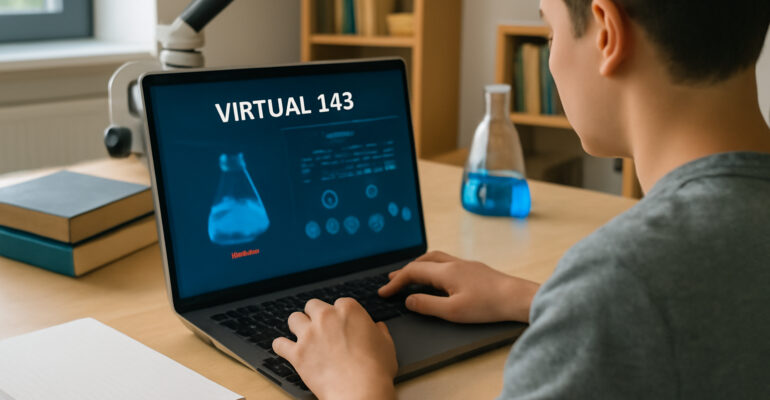
Virtual labs are transforming how science is taught and learned, especially in environments where access to physical laboratories may be limited. By leveraging digital platforms and simulations, students can perform experiments, explore complex scientific concepts, and develop critical thinking skills without the constraints of traditional lab setups. As educational technology evolves, virtual labs are bridging gaps, enabling more inclusive, flexible, and interactive science education.
Expanding Access to Science Education
One of the primary advantages of virtual labs is that they make science experiments accessible to students who may not have access to physical labs, especially in underfunded or rural schools. Virtual labs allow students to engage with scientific concepts through interactive simulations that mimic real-world experiments. These platforms can be accessed from anywhere, eliminating the need for expensive lab equipment and materials. For students in remote areas or with limited resources, virtual labs open up opportunities that would otherwise be out of reach.
Hands-On Learning Through Simulations
Virtual labs enable students to participate in experiments that would be too costly, dangerous, or impractical in a traditional classroom setting. Simulations of chemical reactions, physics experiments, or biological processes allow learners to experiment freely, observe outcomes, and make adjustments. This hands-on approach to learning reinforces theoretical knowledge and helps students better understand complex scientific principles by allowing them to experiment in a safe, controlled environment.
Enhancing Engagement and Interactivity
Virtual labs offer a highly interactive way to explore science topics. Instead of passively receiving information from textbooks or lectures, students can actively engage in experiments that reinforce what they’ve learned. Features like step-by-step instructions, real-time feedback, and the ability to manipulate variables make the learning experience more engaging and memorable. By fostering interactivity, virtual labs help students develop problem-solving skills and critical thinking, essential components of scientific education.
Overcoming Resource Constraints
Many schools face challenges with limited lab space, outdated equipment, or a shortage of trained science teachers. Virtual labs solve these issues by providing low-cost, easily accessible, and up-to-date simulations. Educators can use virtual labs to supplement or replace traditional hands-on experiments, enabling them to teach a wider range of scientific topics. Additionally, virtual labs are scalable, meaning they can accommodate large numbers of students without the need for physical lab setups or extra resources.
Personalized and Self-Paced Learning
Virtual labs offer personalized learning experiences, allowing students to work at their own pace. They can repeat experiments as needed to reinforce understanding or explore different outcomes without the pressure of a timed class session. This self-paced learning environment is particularly beneficial for students who may struggle with traditional classroom instruction, as it provides them with the opportunity to revisit concepts and practice experiments without fear of judgment.
Conclusion
Virtual labs are reshaping science education by making it more accessible, interactive, and efficient. With their ability to bridge gaps in resources, enhance engagement, and provide safe, hands-on experiences, virtual labs are becoming an integral part of modern science curricula. As technology continues to improve, the role of virtual labs will only expand, offering students new ways to explore, learn, and innovate in the world of science.