Creating Adaptive Learning Plans for Effective Skill Growth
June 26, 2026 2026-06-15 10:01Creating Adaptive Learning Plans for Effective Skill Growth
Creating Adaptive Learning Plans for Effective Skill Growth
Introduction
Adaptive learning plans help learners progress efficiently by matching content to current ability and goals.
They reduce wasted time on material that is already mastered while highlighting areas that need reinforcement.
When structured well, these plans balance challenge and support to maintain engagement and confidence.
This approach is especially useful for professionals and students who juggle competing priorities.
Assessing Learner Needs
Start with a clear evaluation of a learner’s starting point, goals, available time, and preferred formats. Use short diagnostics, self-assessments, and goal-setting conversations to gather meaningful data. Analyze this information to identify gaps and prioritize skills that yield the highest impact. Building an adaptive plan depends on accurate, actionable insights about where the learner currently stands.
Assessments should be low friction and repeatable so adjustments can be made as progress is tracked. Regular checkpoints ensure the plan remains aligned with evolving needs and motivation.
Designing Flexible Learning Paths
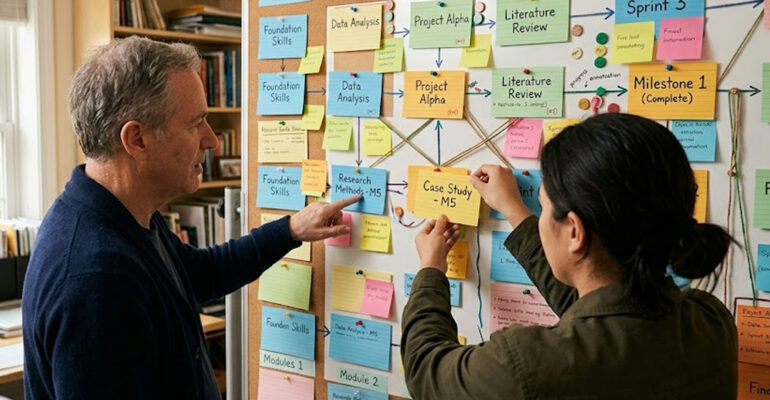
Design modular learning units that can be rearranged or skipped based on assessment results and learner feedback. Each module should have clear objectives, measurable outcomes, and a recommended time commitment so learners can make informed choices. Provide multiple formats—short readings, micro-lessons, and practice tasks—to accommodate diverse learning preferences and schedules. Structure the path so learners can move forward in small, achievable steps while seeing clear markers of progress.
- Prioritize core concepts before optional deep dives.
- Include quick practice items for immediate application.
- Offer scaffolded challenges that increase in complexity.
Flexibility makes it easier to sustain momentum because learners can adapt the plan to real-life constraints without losing continuity.
Maintaining Momentum and Feedback
Consistency is reinforced by short, predictable habits and immediate feedback loops. Use brief daily or weekly actions combined with periodic review sessions to convert practice into durable skills. Feedback should be specific, timely, and actionable: it guides learners toward the next steps and prevents small issues from becoming obstacles. Social accountability, whether through peers or mentors, also plays a key role in sustaining effort and refining performance.
Celebrate milestones and use data to adjust pacing and difficulty. This keeps learners motivated and ensures that the plan evolves as competence grows.
Conclusion
Adaptive learning plans align effort with impact and make progress visible.
They combine assessment, modular design, and timely feedback for sustainable growth.
When maintained thoughtfully, these plans help learners build skills efficiently and confidently.